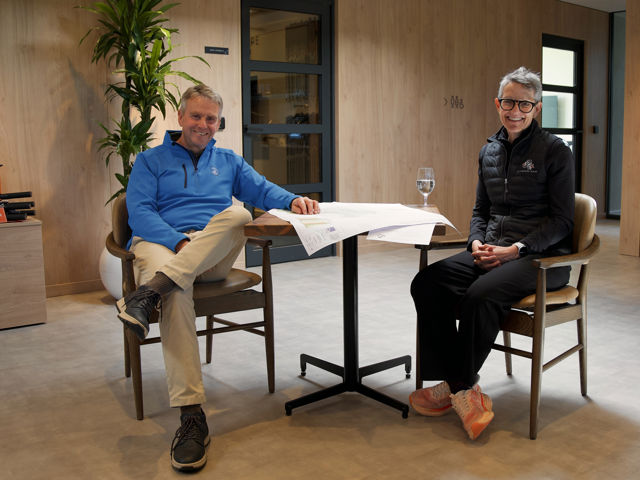


Nature Thriving at La Grande Mare - An Interview with Grace Dovey
As part of La Grande Mare's ongoing commitment to ecological stewardship and sustainability, we sat down with Grace Dovey, Ecologist and Environmental & Sustainability Operations Officer, to learn more about the remarkable biodiversity found across the golf course and the work being done to protect it for future generations.
Drawing on recent ecological surveys, Grace shares how nature is not only surviving at La Grande Mare but flourishing.
Can you tell us about your role and your focus and role here at La Grande Mare?
My role is to work closely with the team at La Grande Mare to understand, monitor and enhance the site's ecological value. We assess the status of habitats and wildlife across the course, identify opportunities for improvement, and help ensure that biodiversity is considered in all aspects of course management.
La Grande Mare is a unique site, covering more than 100 acres and supporting grassland, wetland and woodland habitats. Our aim is to establish a long-term ecological baseline, meet planning commitments and deliver genuine biodiversity gains while maintaining a high-quality golf course.
What sort of species do we have at La Grande Mare, and how have you identified them?
The diversity here is remarkable. To date, surveys have recorded more than 250 plant species, over 300 invertebrate species, 99 bird species, seven bat species, six mammal species, amphibians and freshwater fish.
We use a combination of traditional field surveys, citizen science projects and Environmental DNA (eDNA) sampling. This allows us to detect species in a non-invasive way and build a comprehensive picture of biodiversity across the site.
One of the most exciting findings has been the activity of bats. We have recorded seven of the Channel Islands' thirteen bat species, including Common Pipistrelle, Grey Long-eared and Natterer's bats Hedgerows, ponds and woodland edges provide important feeding and commuting corridors throughout the course.
La Grande Mare has its own Site of Special Significance (SSS), can you tell us about that?
The Site of Special Significance is one of the most important ecological features at La Grande Mare. SSS designations recognise areas of outstanding botanical, scientific or zoological importance and provide protection for these valuable habitats. We form part of the wider South Vazon and La Grande Mare Wet Meadows SSS.
The area is particularly notable for its orchids. We have four orchid species present on site, including the Loose-flowered Orchid, which is thriving in wetter areas. Through careful habitat management and annual monitoring, orchid numbers have continued to increase. We also support a range of wetland plants, along with species such as Smooth Newts and various dragonflies and damselflies species.
There are some excellent stories of nature not just surviving but thriving at La Grande Mare. Can you share some examples?
Absolutely. The results over recent years have been incredibly encouraging.
Since 2022, Bumblebee activity has risen by more than 20%, while solitary bee diversity reached a record high of 29 species in 2025. Dragonfly and damselfly diversity also reached a record 12 species, reflecting the success of wetland restoration work. Some species are now breeding on site, including the Small Red-eyed Damselfly.
Our orchid offset area is another success story. Originally established with 104 orchids, recent surveys recorded 175 plants, demonstrating the positive impact of targeted habitat management.
Birdlife is also thriving. In 2025 we recorded 81 bird species, with numbers increasing by 9% since 2021. Wetland enhancements have benefited species such as Snipe, Little Grebe and Common Sandpiper, while winter surveys have highlighted the site's importance as a migratory and overwintering refuge.
We've even recorded a Greater Horseshoe Bat, a first for the site and a particularly exciting discovery.
How do you work with other Bailiwick organisations and environmental groups?
Partnership working is a vital part of what we do. We collaborate with local wildlife organisations, the Pollinator Project, volunteers and environmental specialists to support surveys, habitat management and conservation initiatives.
We also submit ecological records to the Guernsey Biological Records Centre, helping contribute to island-wide biodiversity monitoring and important publications such as the State of Nature assessments. This ensures the data collected at La Grande Mare supports a wider understanding of Guernsey's natural environment.
What about the wider community? How are you helping islanders engage with the wildlife at La Grande Mare?
Education and community engagement are key priorities for us.
In the past we have organised bat walks for members and visitors, giving people the opportunity to experience some of the site's nocturnal wildlife first-hand. We have also hosted internships and work placements over the past three years, welcoming students from sixth form through to university level.
In addition, we work with volunteers, schools, local charities and businesses taking part in corporate social responsibility initiatives. These partnerships help us carry out practical conservation work while inspiring the next generation of environmental professionals.
How are you safeguarding wildlife while ensuring golf and nature continue to coexist successfully?
The key is integration. Rather than viewing golf and conservation as separate goals, we see them as complementary.
Our Hole-by-Hole Biodiversity Action Plan for our greenkeepers and landscapers provides a detailed strategy for habitat enhancement across the course, ensuring that every area contributes positively to wildlife while remaining functional for golfers.
We also invest in training and education for greenkeeping and landscaping teams, helping them identify and respond appropriately to different species and habitats.
Alongside this, La Grande Mare follows a comprehensive Environmental and Sustainability Policy. Initiatives include reducing single-use plastics, composting coffee grounds, optimising irrigation through evapotranspiration monitoring, sourcing locally where possible, and using 100% organic planting products.
We are also working towards being the first golf course in the Channel Islands to achieve GEO Certified® status, recognising our commitment to sustainability and environmental stewardship.
Every year we are seeing evidence that our habitats are becoming stronger and more diverse. By working together and taking a long-term approach, we can ensure La Grande Mare remains a place where both wildlife and people thrive for generations to come.
La Grande Mare will be hosting a series of nature walks later this year, please keep an eye on the website and social media for more information.